Guide to Pride Flags and Their Meanings – Celebrating Diversity in Aotearoa
- Indie
- Aug 12, 2025
- 3 min read

At a Glance – Flags Covered in This Guide

Rainbow Pride Flag
Progress Pride Flag
Transgender Pride Flag
Bisexual Pride Flag
Pansexual Pride Flag
Asexual Pride Flag
Non-Binary Pride Flag
Intersex Pride Flag
Lesbian Pride Flag
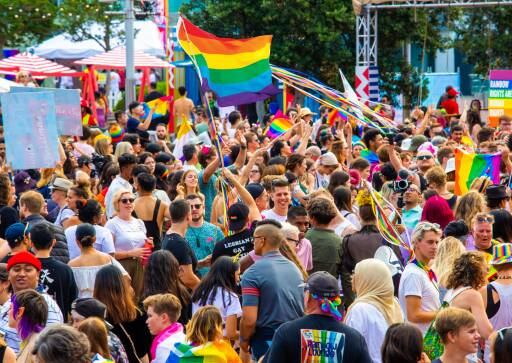
Pride flags are more than just bright colours – they’re symbols of identity, resilience, and community. Each flag tells a story, representing the diverse experiences and voices within the LGBTQ+ whānau. Whether you’re part of the rainbow community or an ally wanting to learn more, here’s a comprehensive guide to the most recognised Pride flags, their meanings, and the beautiful identities they represent.
Rainbow Pride Flag

History: The original Pride flag was created in 1978 by artist and activist Gilbert Baker for San Francisco Pride. Baker’s first version had eight stripes, each with its own meaning, but due to fabric availability, it was later reduced to six colours we see today.
Colours & Meanings:
Red – Life
Orange – Healing
Yellow – Sunlight
Green – Nature
Blue – Harmony
Violet – Spirit
In Our Store: Mini LGBTQ+ Rainbow Pride Flag, Rainbow Lanyard
Progress Pride Flag

History: In 2018, designer Daniel Quasar updated the rainbow flag to include a chevron of black, brown, pink, light blue, and white stripes. This addition recognises marginalised LGBTQ+ communities, trans people, and those living with or lost to HIV/AIDS.
Symbolism: The arrow shape represents forward movement and the ongoing work toward
inclusivity and equality.
Transgender Pride Flag

History: Created in 1999 by transgender activist Monica Helms, the flag is designed so it always flies upright, symbolising finding correctness in one’s life. It first flew at a Pride parade in Phoenix, Arizona, in 2000.
Colours & Meanings:
Light Blue – Boys
Pink – Girls
White – Transition, intersex identities, and non-binary identities
Bisexual Pride Flag

History: Michael Page designed the flag in 1998 to give the bisexual community a distinct and visible symbol. The design blends the traditional pink (same-gender attraction) and blue (different-gender attraction) with purple to represent attraction to more than one gender.
Colours & Meanings:
Pink – Same-gender attraction
Blue – Attraction to different genders
Purple – Attraction to more than one gender
Pansexual Pride Flag

History: Emerging in the early 2010s, the pansexual flag was created to raise awareness and visibility for pansexual individuals, who are attracted to people regardless of gender identity.
Colours & Meanings:
Pink – Attraction to women
Yellow – Attraction to non-binary and gender-diverse people
Blue – Attraction to men
Asexual Pride Flag

History: Created in 2010 by the Asexual Visibility and Education Network (AVEN) following a community vote, the flag represents asexuality, demisexuality, and the spectrum in between.
Colours & Meanings:
Black – Asexuality
Grey – Grey-asexuality and demisexuality
White – Sexuality
Purple – Community
Non-Binary Pride Flag

History: Designed in 2014 by activist Kye Rowan to represent people whose gender identities fall outside the traditional male/female binary.
Colours & Meanings:
Yellow – Outside the binary
White – Many genders
Purple – A mix of male and female
Black – No gender
Intersex Pride Flag

History: Created in 2013 by Morgan Carpenter of Intersex Human Rights Australia, the flag avoids colours traditionally linked to male or female and uses a circle to symbolise wholeness and autonomy.
Colours & Meaning:
Yellow background with a purple circle – Intersex pride, bodily autonomy, and wholeness
Lesbian Pride Flag

History: The current widely used seven-stripe version was popularised in the 2010s, representing a diverse range of lesbian identities and experiences, including gender non-conforming lesbians.
Colours & Meanings:
Dark Orange – Gender non-conformity
Orange – Independence
Light Orange – Community
White – Unique relationships to womanhood
Light Pink – Serenity and peace
Pink – Love and sex
Dark Pink – Femininity
Why Pride Flags Matter
These flags are more than symbols – they are declarations of existence, solidarity, and love. For LGBTQ+ people, they are powerful affirmations. For allies, displaying them is an act of visible support.
If you want to wear or fly your flag proudly, you can find flags, pins, and accessories for many of these designs at Aroha Pride Co. every purchase helps us create visibility and celebration year-round, not just during Pride Month.
Be bold. Be you. Be proud.
With aroha,
Charlotte & the Aroha Pride Co. whānau